 In Part 1 of this series, we explored dry-running (gas-lubricated) double mechanical seals and their advantages in clean, contamination-sensitive applications.
In this installment, we turn our focus to lubricated (wet) double mechanical seals—a robust and widely used solution for high-pressure glass-lined reactors operating under more demanding conditions, including higher loads, high temperatures, and the presence of solids.
Understanding Lubricated Double Mechanical Seals
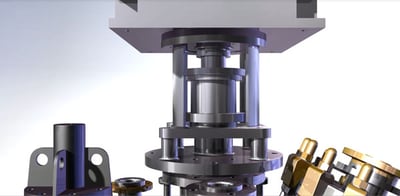
Lubricated double mechanical seals rely on a pressurized liquid barrier to separate the process fluid from the atmosphere. This barrier fluid lubricates and cools the seal faces while also providing an additional containment layer.
How Lubricated Seals Work
In a lubricated seal system:
- A compatible barrier fluid is maintained at a pressure higher than the reactor
- The fluid circulates between the inner (process side) and outer (atmosphere side) seal faces
- The barrier fluid provides lubrication, cooling, and containment
This configuration helps maintain a stable seal environment even under demanding operating conditions.
Key Advantages
1. Superior Cooling and Heat Removal
Liquid barrier fluids are highly effective at dissipating heat, making these seals ideal for:
- High-temperature operations
- High-energy mixing processes
2. Reliable Performance in Heavy-Duty Applications
Lubricated seals are well-suited for:
- High-pressure environments
- Processes with frequent mechanical or thermal upsets
- Operations involving viscous fluids or abrasive solids
3. Better Handling of Solids
Compared to dry-running seals, lubricated systems are more tolerant of solids and slurries, making them a preferred choice in many chemical and industrial processes.
Typical Applications
Lubricated double mechanical seals are commonly used in:
- General chemical processing
- Polymer and resin production
- Slurry and solids-containing reactions
- High-pressure chemical reactions above 150 psig or when operating temperatures are in excess of 350°F
Important Considerations
Lubricated systems do require additional infrastructure and attention:
- Barrier fluid systems (reservoirs, pumps, and heat exchangers)
- Monitoring of fluid pressure, temperature, and condition
- Compatibility between barrier fluid and process chemistry
There is also a potential for barrier fluid contamination, which should be considered during specification.
Final Thoughts
Lubricated double mechanical seals remain the solution for high-pressure glass-lined reactors. Their durability, flexibility, and ability to handle heavier-duty conditions make them ideal for many chemical processes.
In Part 3 of this series, we’ll explore high-purity sealing solutions designed for pharmaceutical and other contamination-sensitive applications where even trace particles or fluid ingress cannot be tolerated.