Best Fit

When to Use Inline Samplers

Inline samplers are typically the starting point when the sampling location is a process pipeline and the goal is to collect a representative sample directly from the flowing line.

  • Process pipeline sampling
  • Incoming raw material checks
  • In-process quality checks between unit operations
  • Product transfer lines
  • Corrosive streams requiring PFA-lined wetted surfaces
  • Pipeline sampling under vacuum or pressure

Overview

Representative Pipeline Sampling

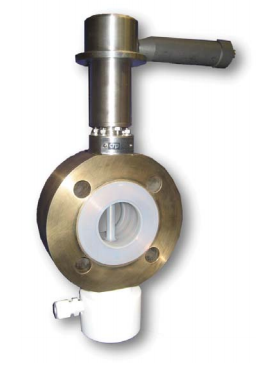
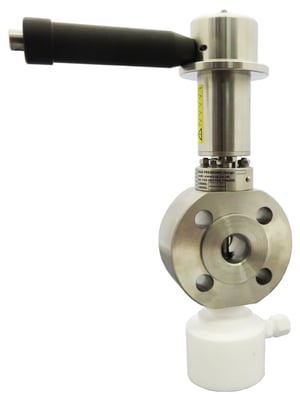
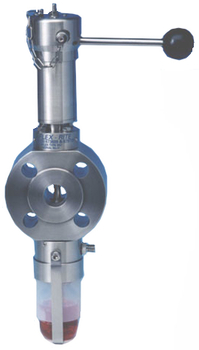
De Dietrich inline samplers are wafer-style sampling valves designed to take representative samples from process pipelines. They can be installed in horizontal or vertical piping and are available in metallic and PFA-lined configurations for applications involving vacuum*, pressure, and corrosive process media.

  • 1-6" Nominal Bore

  • Vacuum* to Pressure Operation

  • 316L / PFA Material Options

  • Fail-Safe Spring-Return Handle

*Inline samplers are rated for vacuum service, but cannot take a sample while the process line is under vacuum.

Design Options

The metallic SD-IL-300 and PFA-lined SD-IL-400 provide robust sampling options where safe operation, chemical compatibility, and representative sample quality are important.

  • Wafer-style body
  • Spring-return operating handle
  • Designed for horizontal or vertical pipe installations
  • Sampling with reduced process exposure

Metallic SD-IL-300

Metallic inline sampling valve for process pipeline applications where stainless steel wetted construction is suitable.
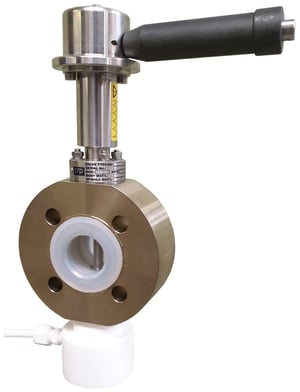
  •  Serviceable stem and tip seals

PFA-lined SD-IL-400

PFA-lined inline sampling valve for corrosive process streams where lined wetted surfaces are required.
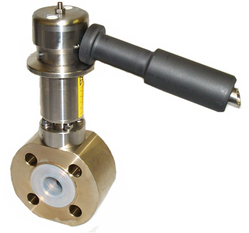
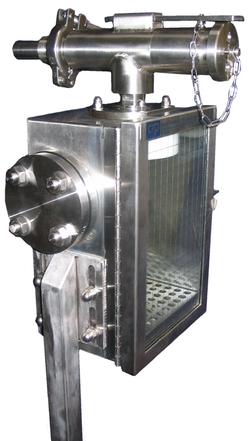
  • PFA-lined wetted construction
  • Designed for aggressive chemical service
  • Pipeline sampling under pressure


FAQs

samp_15-1

What is an inline sampler?

An inline sampler is a sampling device installed directly into a process pipeline that allows operators to obtain a representative sample of process media without opening equipment or interrupting production.


When should an inline sampler be used?

Inline samplers are commonly used when sampling directly from a vessel is difficult, unsafe, or impractical. They are often installed in process pipelines to monitor incoming raw materials, chemicals being added to a process, or product quality between process steps.


What are the advantages of inline sampling compared to vessel sampling?

Inline sampling can provide easier access to process material, reduce operator exposure, minimize contamination risks, eliminate sample point dead-legs, and allow samples to be collected from a specific point within the process flow rather than directly from a vessel.


Can inline samplers be used on pressurized pipelines?

Yes. All inline sampling systems are designed to operate under pressure and safely obtain representative samples from pipelines without depressurizing the system. 


Can inline samplers be used under vacuum?

Yes. Inline samplers can be designed to operate in applications ranging from full vacuum to pressurized service.  They are rated for vacuum service, but cannot sample under vacuum.


What applications are best suited for inline samplers?

Inline samplers are often used for:

  • Sampling incoming raw materials
  • Monitoring chemical additions
  • Quality control between process steps
  • Corrosive chemical processing
  • Continuous and semi-batch manufacturing processes
  • Hazardous or difficult-to-access sampling locations

Are inline samplers suitable for corrosive chemicals?

Yes. PFA-lined inline samplers are commonly used for highly corrosive chemicals where stainless steel may not provide adequate corrosion resistance.


Can inline samplers be installed in both horizontal and vertical pipelines?

Yes. Inline samplers can typically be configured for either horizontal or vertical piping systems.


How do inline samplers improve operator safety?

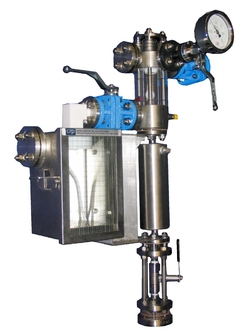
Inline samplers allow operators to collect samples in a controlled manner without opening process equipment. Optional safety cabinets, closed dispensing systems, and contained sampling arrangements can further reduce exposure to hazardous materials and fumes.


How do I choose the right inline sampler?

Selection typically depends on:

  • Process pressure and temperature
  • Chemical compatibility
  • Required sample volume
  • Level of containment required
  • Pipeline size and orientation
  • Sampling frequency

What materials of construction are available for inline samplers?

Common options include 316L stainless steel, PFA-lined stainless steel, and other corrosion-resistant materials depending on process requirements. 

Need help confirming whether an inline sampler is appropriate?

Send us the line size, process conditions, material requirements, and sample bottle needs.