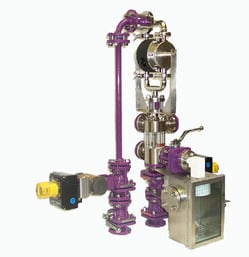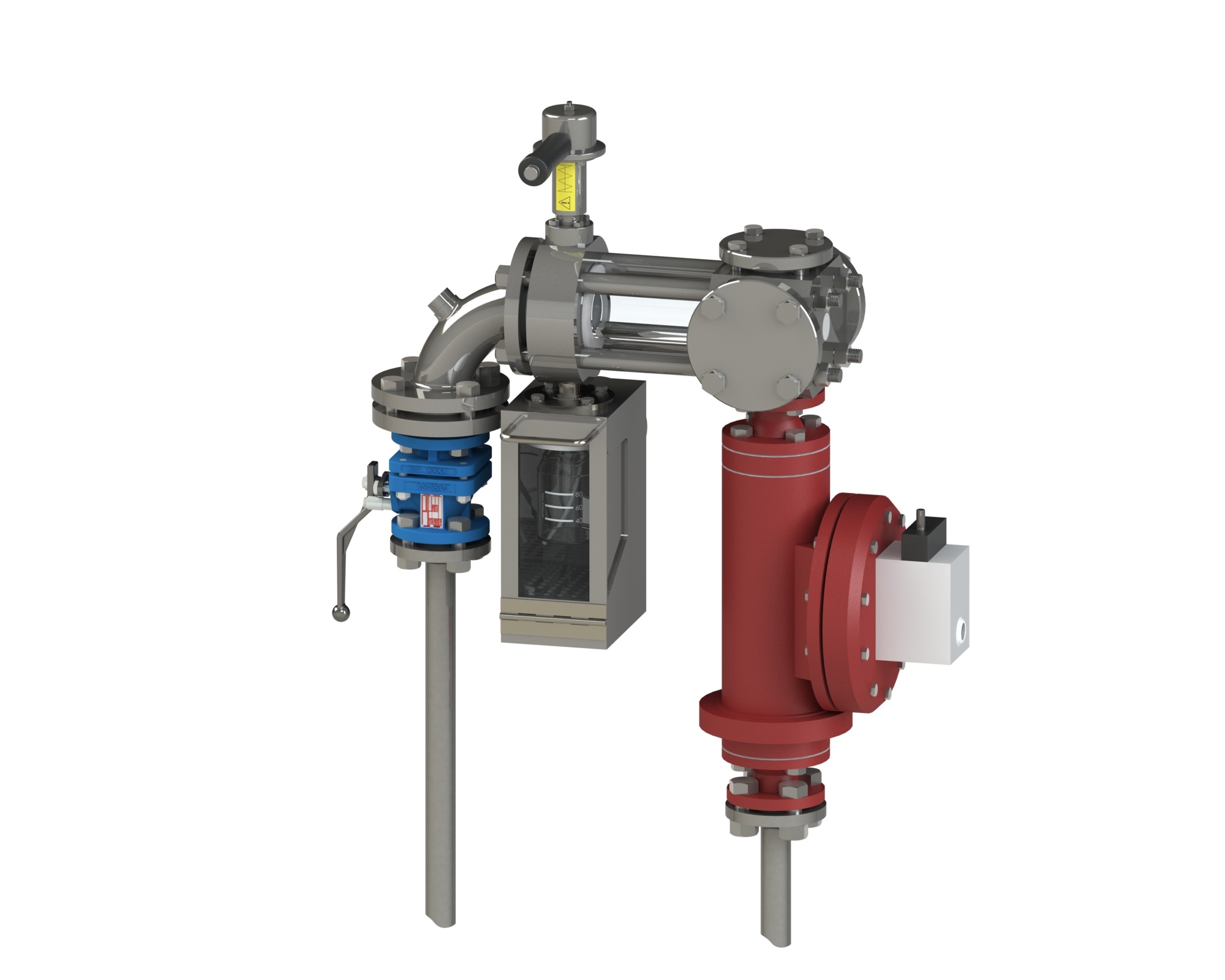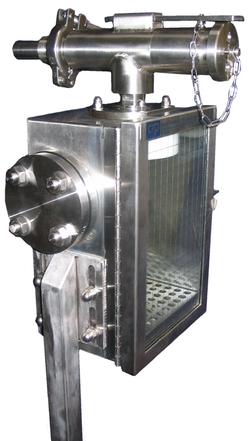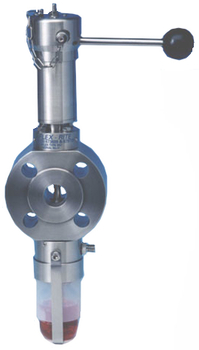
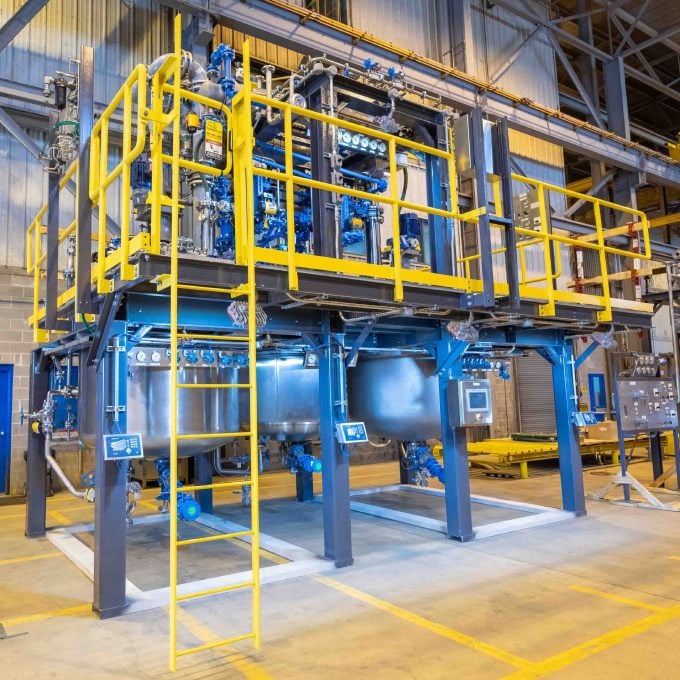
Dip-pipe and recirculating sampling systems for reactors, storage vessels, and batch processing applications.

Vessel mounted systems are the starting point for reactors, storage vessels, and batch processing applications where the sample is drawn through a dip pipe or recirculating arrangement.
De Dietrich vessel mounted sampling systems are used for reactors, storage vessels, and batch processing applications where samples are drawn from the vessel through a dip pipe or recirculating arrangement. Systems can be configured around the required draw method, sample volume, containment level, materials of construction, and available plant utilities.
The sample can be drawn through the dip pipe using site vacuum, eductor, vessel pressure, or a recirculating pump.
Only one top nozzle is used for recirculating samplers - the same nozzle can pull the sample up and put the sample back in the vessel. Customers also add pH, conductivity, and other analytical transmitters into recirculating lines.
350°F Temperature Range
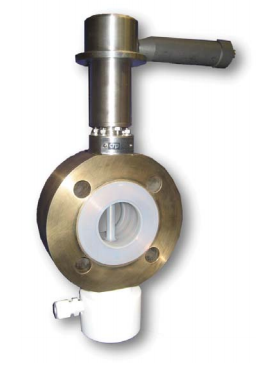
PTFE / PFA-Lined Options
| Arrangement | Best Fit | Typical Reason to Choose It |
|---|---|---|
| Single sampling system | Simple vessel sampling | Useful where site vacuum or vessel pressure is suitable and a compact arrangement is desired. |
| Compact recirculating system | Limited-space applications | Useful where recirculation is needed but the operator area or skid envelope is limited. |
| Recirculating sampling system |
Higher sample representativeness needs |
Useful where purge/wash, circulation, or return-to-vessel flow is important. |
Typical system elements
|
Material and containment options
|

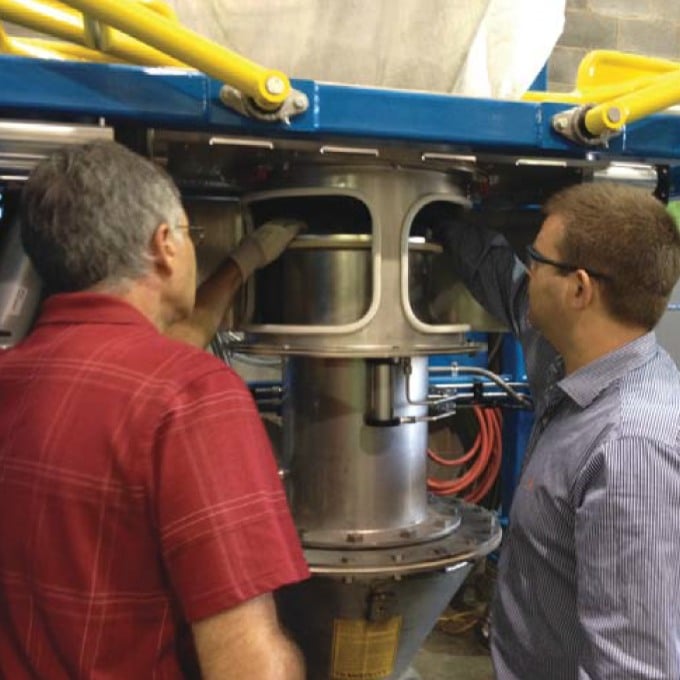
A vessel-mounted sampler is installed directly on a reactor, tank, or other process vessel to allow operators to safely collect representative samples from the process. These samplers provide direct access to vessel contents while helping maintain process containment and operator safety.
Vessel-mounted samplers are ideal when samples must be taken directly from a reactor or process vessel to monitor reaction progress, verify product quality, or support process control. They are commonly used in batch manufacturing operations where representative vessel samples are critical.
Vessel-mounted samplers provide direct access to process material, allowing operators to obtain representative samples without opening manways or exposing the process to contamination. Benefits include improved safety, reduced product loss, enhanced process control, and more consistent sampling results.
Vessel-mounted samplers are commonly used in:
Yes. Vessel-mounted samplers are frequently used on glass-lined reactors and other corrosion-resistant process vessels where safe, representative sampling is required throughout the batch process.
Yes. Vessel-mounted samplers are often selected for hazardous, toxic, corrosive, or flammable applications because they help maintain containment and reduce operator exposure during sample collection.
Yes. Vessel-mounted samplers are designed to allow sampling during normal process operation, enabling operators to monitor reaction progress and product quality without interrupting production.
Yes. Vessel-mounted samplers can be designed for elevated process temperatures and are commonly used in applications where reaction monitoring is required throughout the heating and cooling phases of a batch process.
Yes. Vessel-mounted samplers can be designed to safely collect samples from pressurized vessels while maintaining process integrity and operator safety. Proper sampler selection should be based on the application's pressure and temperature requirements.
Selecting the right sampler depends on several factors, including:
Working with an experienced supplier can help ensure the best solution for the application.
A vessel-mounted sampler is installed directly on a reactor or process vessel top nozzle and is specifically designed to collect representative samples from within the vessel. Surface-mounted samplers are mounted on the sides of vessels or large process piping. The best choice depends on the process, vessel design, and sampling objectives.
Sampling frequency depends on the process and product requirements. Some applications may require only a few samples per batch, while others require frequent sampling to monitor critical reaction parameters and ensure product specifications are met.
Send us the vessel details, process conditions, sample volume, draw method preference, and containment requirements.
DE DIETRICH is the world's leading provider of engineered systems, process equipment and solutions for the pharmaceutical, food, green chemistry and chemical industries.
Quick Links