
 In part 2 of this series, we examined lubricated (liquid barrier) double mechanical seals and their role as a reliable, heavy-duty solution for challenging reactor environments.
In this final installment, we focus on high-purity sealing solutions, which are specifically designed for pharmaceutical and other critical applications where eliminating contamination is essential.
Understanding High-Purity Seals
In many pharmaceutical and other contamination-sensitive applications, maintaining batch integrity is critical. One often-overlooked source of contamination is particle generation from mechanical seal faces, particularly carbon wear debris. Even trace amounts of these particles can compromise product quality and create challenges in regulated environments.
Managing Seal Face Debris
To address this issue, some traditional seal designs incorporate a “debris well” located in the vapor space beneath the seal. This component is typically manufactured from high-alloy materials to withstand the aggressive chemical environment inside the reactor.
Its purpose is to:
- Capture a significant percentage of carbon particles generated at the seal faces
- Prevent those particles from entering the reactor contents
While effective, this approach introduces an additional maintenance requirement, as the debris well must be cleaned periodically between batches.
Eliminating Contamination at the Source
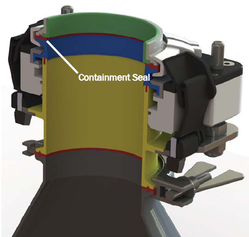
A more advanced approach is to eliminate both seal face wear and barrier fluid contamination entirely. Through our partnership with A.W. Chesterton, we have developed a high-purity sealing solution for glass-lined reactors: the OptiSeal®.
This design takes a fundamentally different approach:
- A nitrogen-energized PTFE sealing element replaces traditional carbon-based seal faces
- No carbon wear surfaces, eliminating particulate generation
- No barrier fluid, removing another potential contamination pathway
Built for Demanding Reactor Conditions
Beyond purity, the OptiSeal is engineered for durability:
- Constructed from ceramics and fluoropolymers for chemical resistance
- Capable of handling shaft runout of 0.250”
- Designed for rugged, long-term operation in glass-lined equipment
Selecting the Right Seal for Your Process
All seal types have proven to be reliable when applied correctly. However, if process requirements are not fully understood, specifying the wrong seal can result in:
- Premature failure
- Batch contamination
- Safety or environmental issues
Understanding process conditions, equipment operation, and cleaning requirements is essential to selecting the right sealing solution.
Final Thoughts
High-purity seals are essential for applications where contamination cannot be tolerated. By eliminating both particle generation and barrier fluid risks, they provide a powerful solution for pharmaceutical and other critical processes.