
Temperature Measurement Is Not Uniform
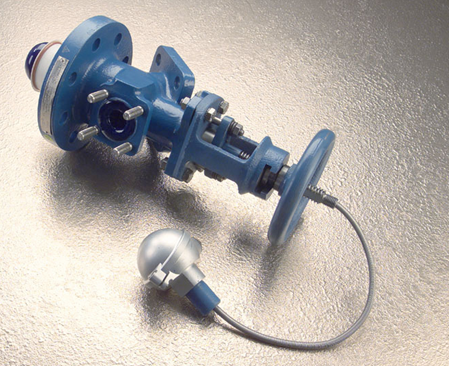
In glass-lined reactors, the temperature displayed on the HMI is often assumed to represent the batch temperature. In practice, that value depends on sensor placement, response time, and the mixing profile within the vessel.
When RTDs are poorly positioned, the impact is measurable: Longer batch times, inconsistent reaction kinetics, localized overheating at the wall, variability in crystallization, and challenges during scale-up are all common outcomes. RTD placement should therefore be treated as a process design variable, not simply an instrumentation detail.
Heat Transfer Behavior in Glass-Lined Systems
Heat transfer in a glass-lined reactor occurs through a series of resistances. Utility fluid in the jacket transfers heat through the jacket wall, the steel shell, and the glass lining before reaching the process fluid. A boundary layer forms at the interface, further limiting transfer efficiency.
The glass lining introduces additional thermal resistance compared to bare metal systems. As a result, temperature gradients can develop between the wall and the bulk fluid.
Agitation plays a critical role in reducing these gradients. Without sufficient mixing, localized hot spots and wall overheating can occur even when the measured temperature appears within range.
Impact of RTD Placement on Measurement Accuracy
RTD location determines how well the measured temperature represents the bulk fluid.
Baffle-mounted RTDs are positioned within the active mixing zone. Under appropriate agitation conditions, they provide a closer approximation of bulk temperature and respond more quickly to changes in process conditions. This makes them suitable for applications requiring tight temperature control, such as exothermic reactions and crystallization.
Dip pipe (thermowell) RTDs offer flexibility in insertion depth and are easier to retrofit in some systems. However, their accuracy depends on placement relative to flow patterns. If located in low-velocity or stratified regions, they may not reflect bulk conditions. Response time can also be slower due to thermowell mass.
An internal probe does not inherently guarantee accurate bulk temperature measurement. Mixing conditions must be considered in parallel with sensor placement.
Jacket Temperature vs. Internal Temperature
In most systems, the jacket temperature is used as the primary control variable. However, the internal process temperature typically lags behind the jacket temperature.
This difference can range from 5 to 20°C depending on factors such as viscosity, agitation efficiency, fouling, and overall heat transfer performance.
Increasing jacket temperature to compensate for this lag can introduce additional issues, including increased stress on the glass lining, higher utility consumption, and risk of thermal shock.
From a process standpoint, inaccurate internal temperature measurement can lead to reaction control issues, extended batch times, and variability between development and production scales.
A combined control strategy that considers both jacket and internal temperatures, along with monitoring the temperature difference between them, provides a more reliable approach.
Sensor Response Time and Its Effect on Control
RTD response time is influenced by several factors, including thermowell mass, fluid velocity across the sensor, glass thermal resistance, and fouling.
Delayed response introduces challenges in temperature control. These include overshoot, oscillation, slower ramp rates, and longer stabilization periods.
In one representative case, a delay of 2–3 minutes in sensor response during an exothermic reaction resulted in a temperature overshoot of 8–10°C. The subsequent cooling cycle extended the total batch time by approximately 45 minutes.
Proper sensor design and placement, such as ensuring adequate insertion length and positioning within high-velocity zones, are necessary to minimize lag and improve control performance.
Role of Thermal Mapping
Thermal mapping provides a method to evaluate temperature distribution within the reactor. This can be performed using temporary sensors, infrared techniques, or computational modeling.
These approaches can identify vertical stratification, differences between wall and bulk temperatures, and regions of inadequate mixing.
Thermal mapping is particularly useful in scale-up validation, crystallization studies, and processes involving high-viscosity fluids. It supports improved reproducibility and reduces uncertainty when transferring processes from pilot to production scale.
Process and Business Implications
Accurate temperature measurement contributes directly to process performance. Proper RTD placement can reduce heat-up and cooling times, improve temperature control, and decrease variability between batches.
These improvements translate into increased throughput, reduced energy consumption, improved product quality, and fewer scale-up issues.
Conclusion
RTD placement should be defined during reactor specification, process development, and scale-up planning. In glass-lined reactors, where heat transfer limitations and material constraints are significant, temperature measurement strategy plays a central role in overall system performance. Treating sensor placement as a design parameter rather than a secondary consideration leads to more reliable and efficient operation.
Optimizing RTD placement is just one piece of maximizing reactor performance. For a deeper dive into improving heat transfer, mixing efficiency, and overall process reliability, download our “Optimizing the Glass-Lined Reactor” white paper.
Have specific questions about your application? Contact De Dietrich to discuss your process and discover how our experts can help optimize your reactor system.