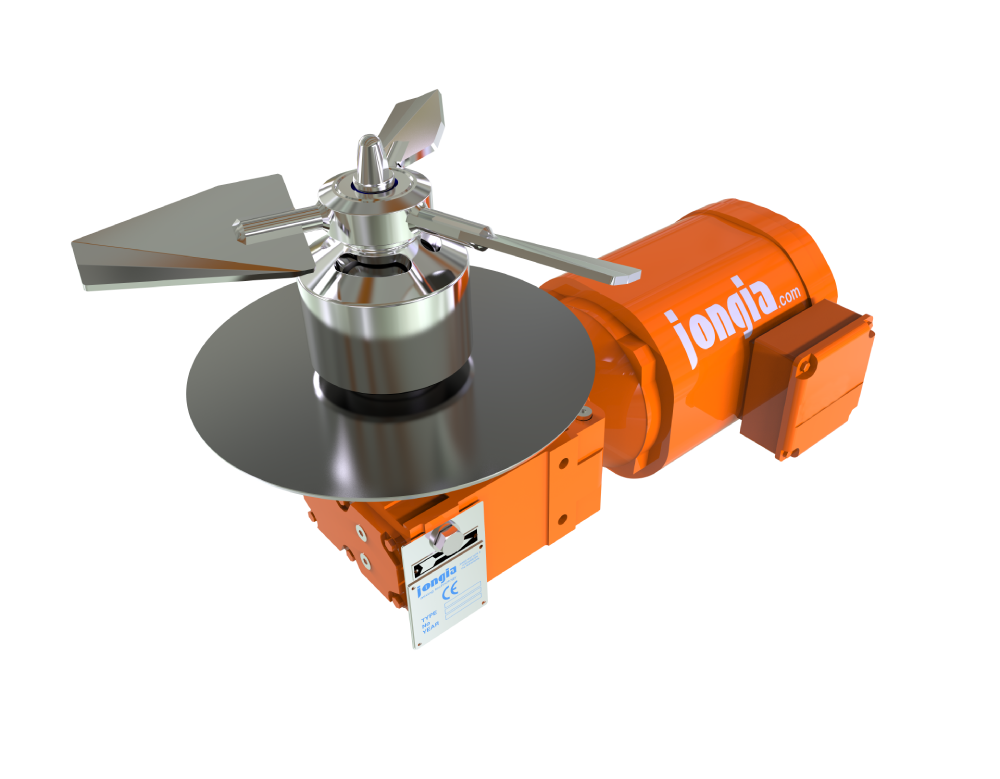
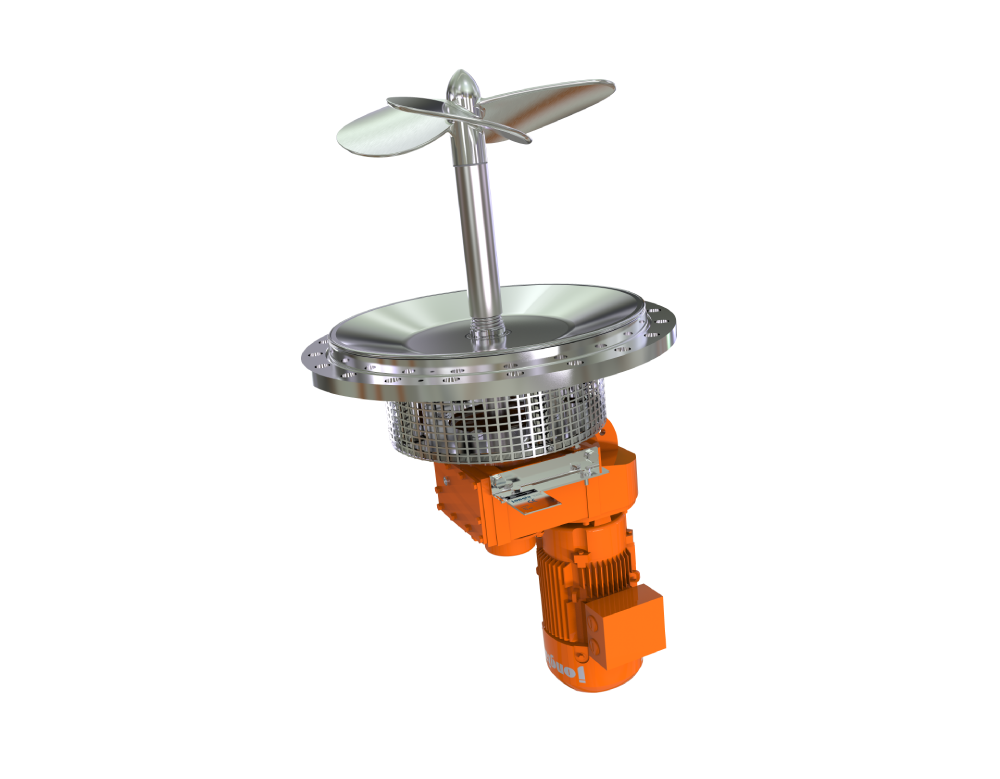
What is a bottom-entry agitator?
A bottom-entry agitator is mounted through the base or lower portion of a vessel. The mixing element operates near the vessel bottom, while the drive is positioned outside and below the tank.
When should a bottom-entry agitator be considered?
Bottom entry may be advantageous when overhead space is limited, the vessel head is occupied by other equipment, mixing is required near the tank bottom or a compact hygienic arrangement is desired.
What hygienic advantages can bottom entry provide?
Bottom-entry designs can use short internal shafts, polished product-contact surfaces and open, cleanable mixing heads. Magnetic-drive configurations also eliminate the rotating mechanical shaft seal.
Can a bottom-entry agitator mix at a low liquid level?
Because the mixing element is positioned near the vessel bottom, bottom-entry designs may be able to maintain circulation at lower fill levels than some alternative arrangements. The actual minimum level depends on the mixing element, speed, vessel geometry and process requirements.
What is the difference between the JMB, JRWB and HDMB?
The JMB is a light-duty magnetically driven mixer suited to hygienic, lower-viscosity applications. The JRWB is a medium-duty geared mixer that can use single or double mechanical seals. The HDMB is designed for severe industrial applications involving high loads, viscosity, pressure or temperature.
What is the advantage of a magnetic-drive mixer?
A magnetic coupling transfers power without a rotating shaft passing through a mechanical seal. This keeps the vessel hermetically closed and can reduce leakage potential, contamination risk and seal maintenance.
Are mechanical-seal configurations available?
Yes. Depending on the product and operating conditions, bottom-entry agitators can be supplied with single or double mechanical seals and associated seal-liquid systems.
Is bottom-entry equipment more difficult to maintain?
Maintenance access requires careful planning because the drive and seal are located below the vessel. Sufficient clearance and safe access should be incorporated into the support structure and equipment layout. Options such as spacer couplings can simplify seal replacement on certain models.
Can bottom-entry agitators process viscous products?
Yes. Medium- and heavy-duty configurations can handle more viscous products. Selection depends on viscosity behavior, torque, vessel geometry, temperature and the required circulation pattern.
Are hygienic surface finishes available?
Yes. Product-contact components can be ground, hand polished or electropolished to meet application-specific surface-finish requirements.
Can a bottom-entry agitator be installed on an existing vessel?
Potentially. A retrofit review must confirm vessel-bottom geometry, structural support, nozzle design, internal clearances, drainage, external service space and process suitability.
Are hazardous-location configurations available?
Agitators can be configured for hazardous environments. Motors and associated components must be selected according to the installation and applicable North American electrical and mechanical requirements.
What information is needed to select a bottom-entry agitator?
Useful information includes the mixing objective, product properties, vessel dimensions, working volume, minimum operating level, viscosity, density, solids content, temperature, pressure, material requirements, cleaning procedure and available clearance beneath the vessel.