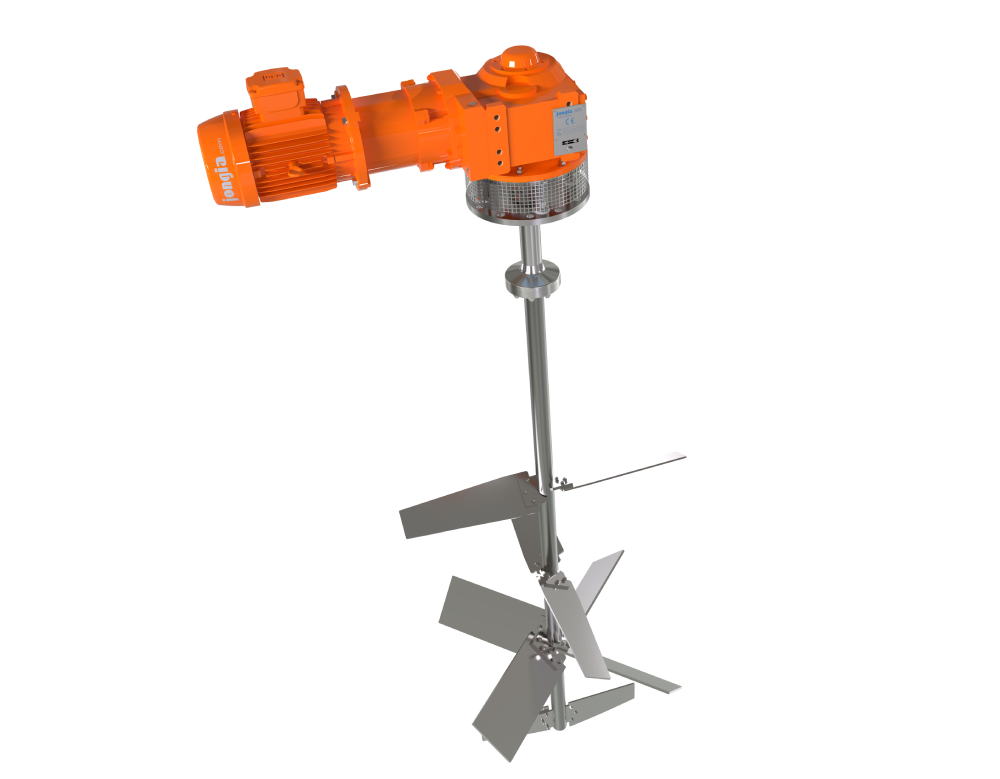
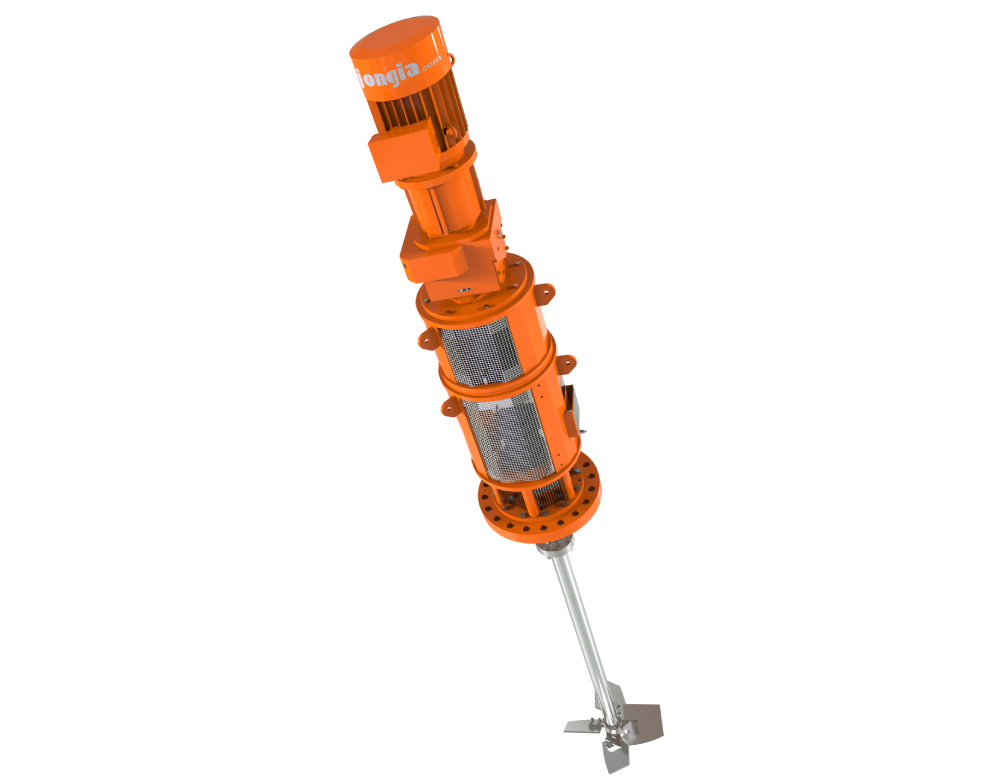
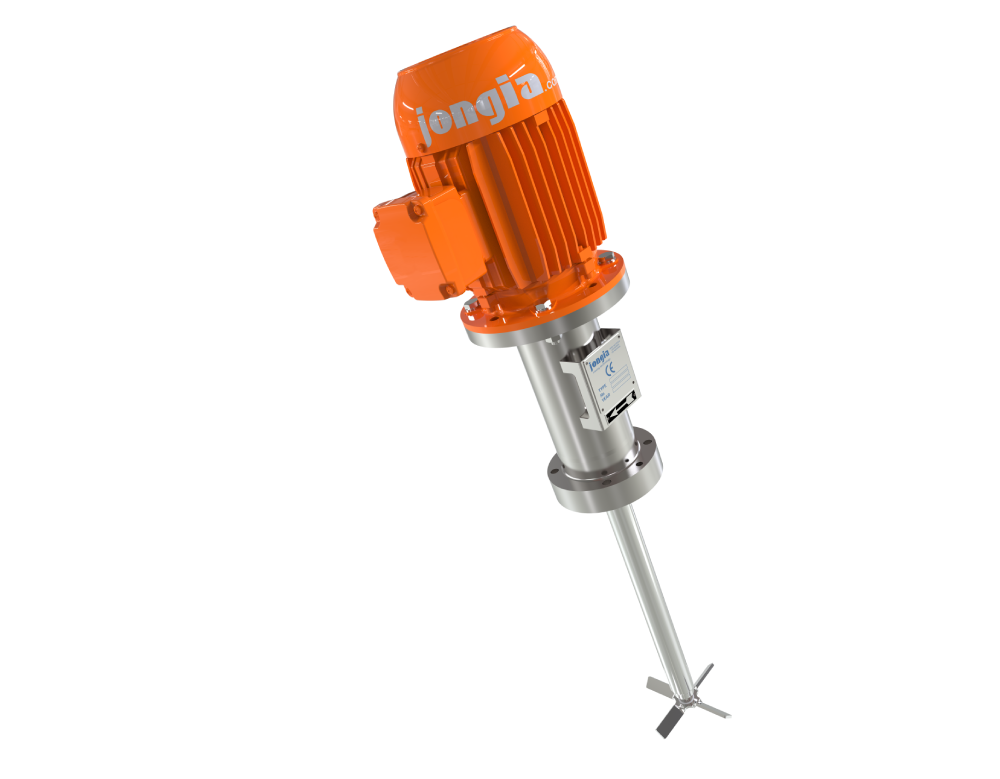
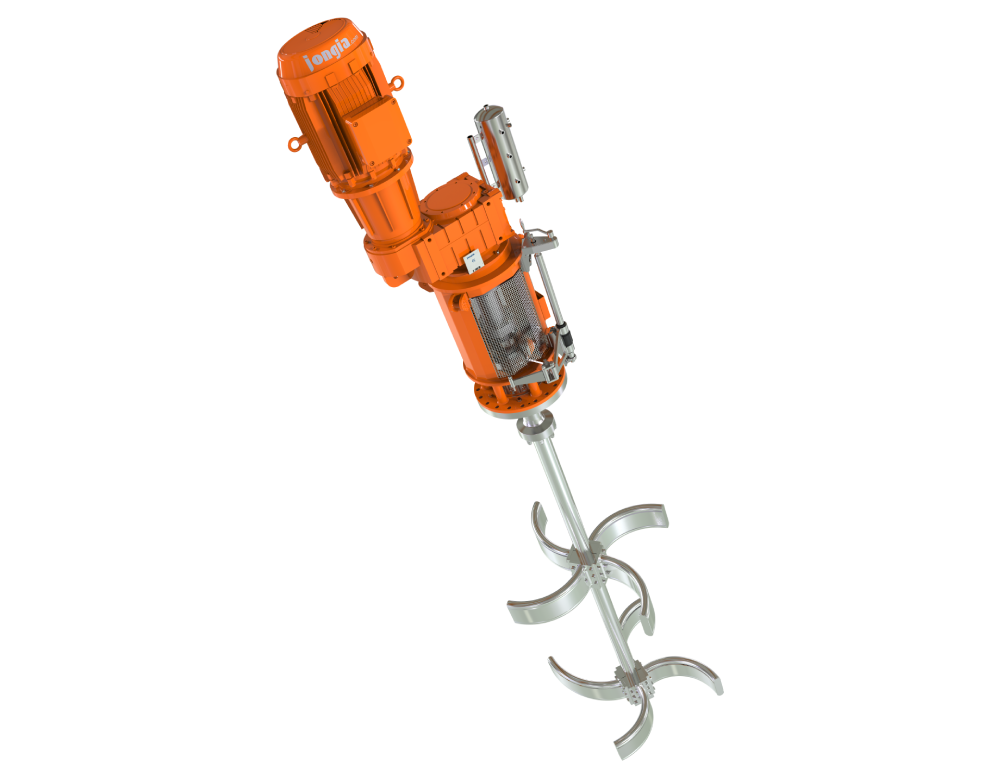
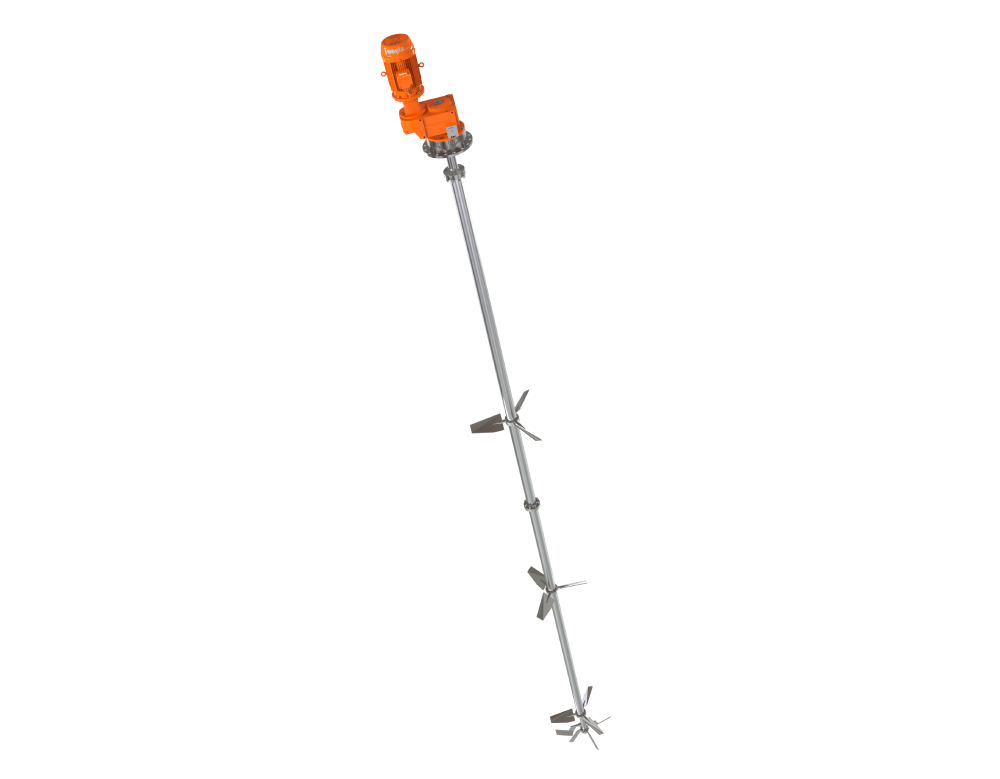
What is a top-entry agitator?
A top-entry agitator is mounted through the head or roof of a vessel, with the drive positioned above the tank and the shaft extending down into the product. One or more mixing elements generate the flow required for the process.
When should a top-entry agitator be used?
Top-entry agitators are commonly used when full-vessel circulation, solids suspension, gas dispersion, heat transfer or higher-intensity process mixing is required. They are especially versatile when adequate mounting and service space is available above the vessel.
What is the difference between light-, medium- and heavy-duty designs?
The categories reflect the overall mechanical and process demands placed on the agitator. Light-duty designs generally serve straightforward, lower-load applications. Medium-duty designs address greater viscosity, volume or operating severity. Heavy-duty designs are intended for severe conditions involving high loads, very large tanks, high viscosity, pressure or temperature.
Is duty level determined by motor power?
No. Motor power is only one consideration. Agitator selection also depends on viscosity, density, solids concentration, vessel geometry, shaft length, pressure, temperature, operating speed, mixing element and the required process result.
Can a top-entry agitator be used in a pressurized vessel?
Yes. Configurations are available for pressurized and vacuum vessels. The shaft seal, mounting flange, bearing arrangement and other components must be selected for the specific design conditions.
Can these agitators process high-viscosity products?
Yes. Medium- and heavy-duty agitators can be configured for viscous and non-Newtonian products. The mixing element, speed, torque, shaft design and vessel geometry must be evaluated together.
Is a bottom bearing always required?
No. Many top-entry agitators are designed to operate without a bottom bearing. Whether one is needed depends on shaft length, speed, impeller loading, vessel geometry and allowable shaft deflection.
Which mixing element should I use?
The correct mixing element depends on the desired flow pattern and process objective. Axial-flow designs are often used for circulation and suspension, while radial-flow or high-shear designs may be selected for gas dispersion or dispersion duties. The final selection should be based on an engineering review.
Are hygienic configurations available?
Yes. Hygienic materials, polished or electropolished product-contact surfaces, sanitary seals and application-specific flange arrangements can be provided for food, dairy, pharmaceutical and personal-care processes.
Are hazardous-location designs available?
Agitators can be configured for hazardous environments. The applicable electrical and mechanical requirements should be specified according to the installation location and governing North American codes.
Can a top-entry agitator be retrofitted to an existing vessel?
Often, yes. A retrofit evaluation should confirm the vessel opening, support structure, nozzle loads, available headroom, shaft length, internal clearances and required mixing performance.
What information is needed to size an agitator?
Useful information includes the process objective, vessel dimensions, working volume, product viscosity and density, solids content, particle characteristics, temperature, pressure, required mixing time, existing internals and installation constraints.