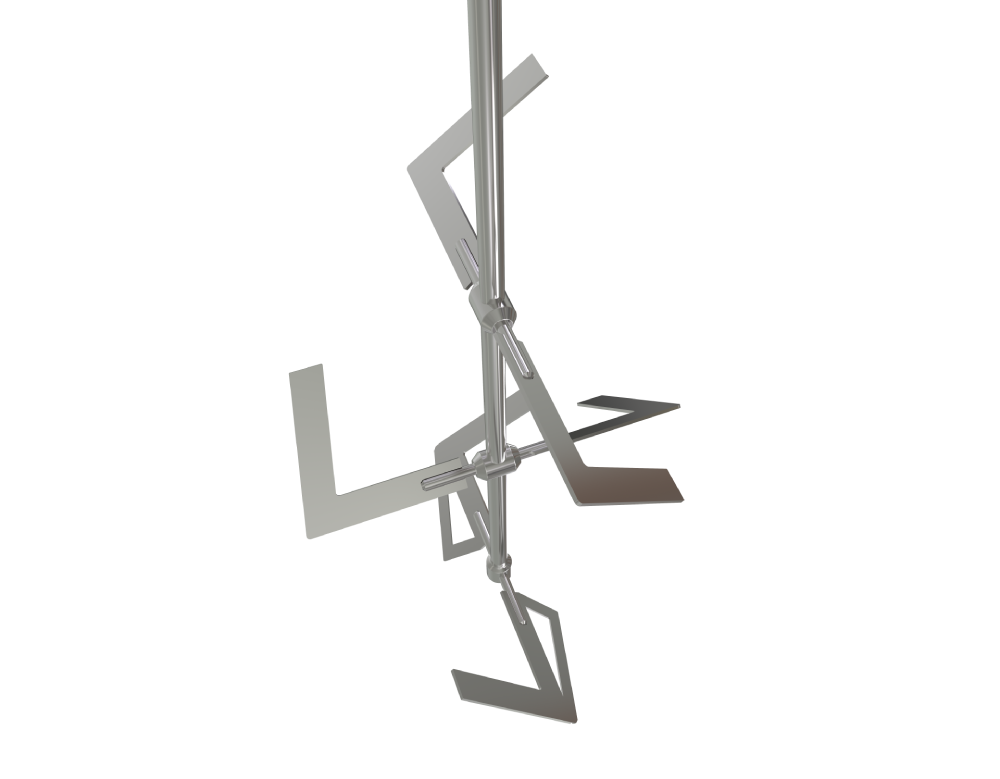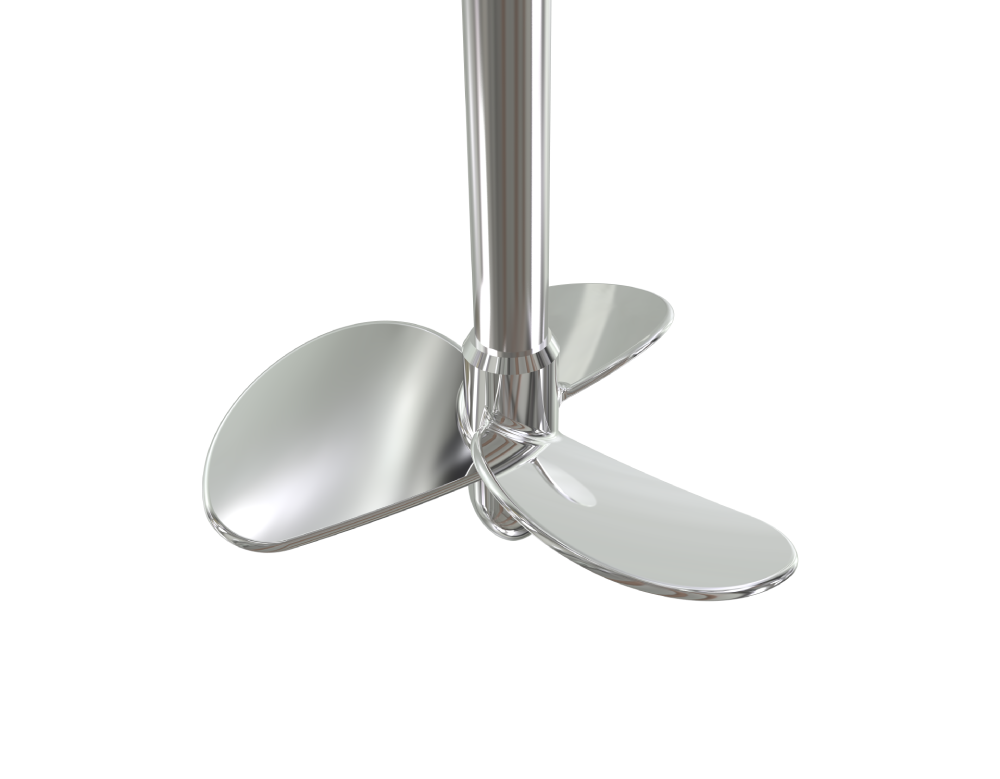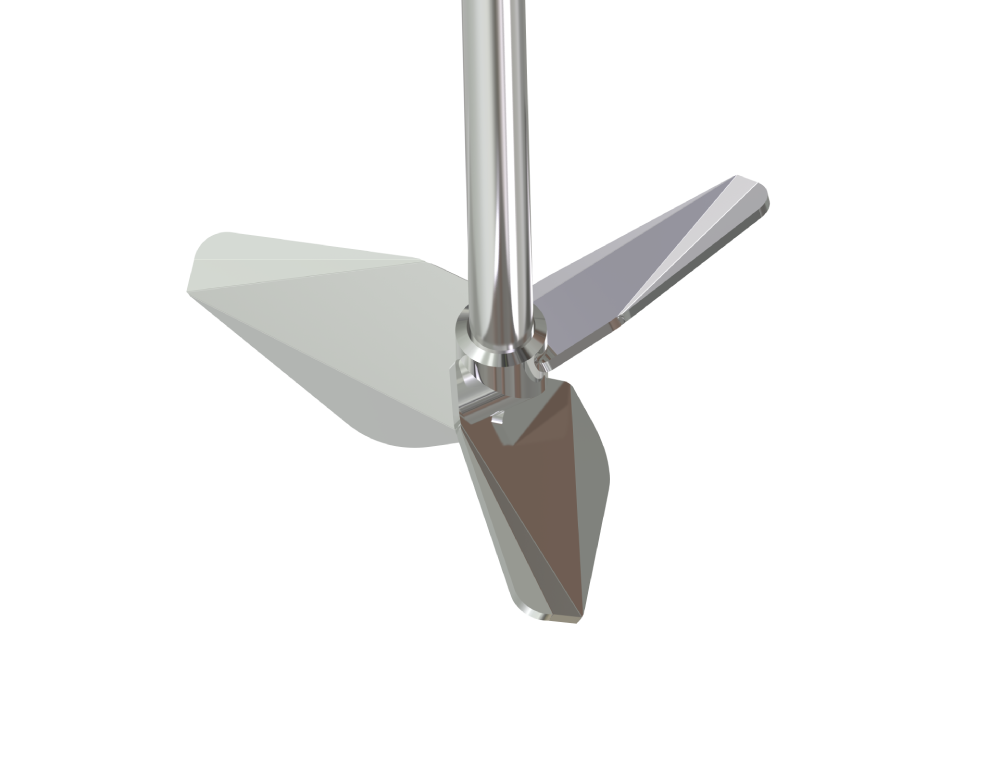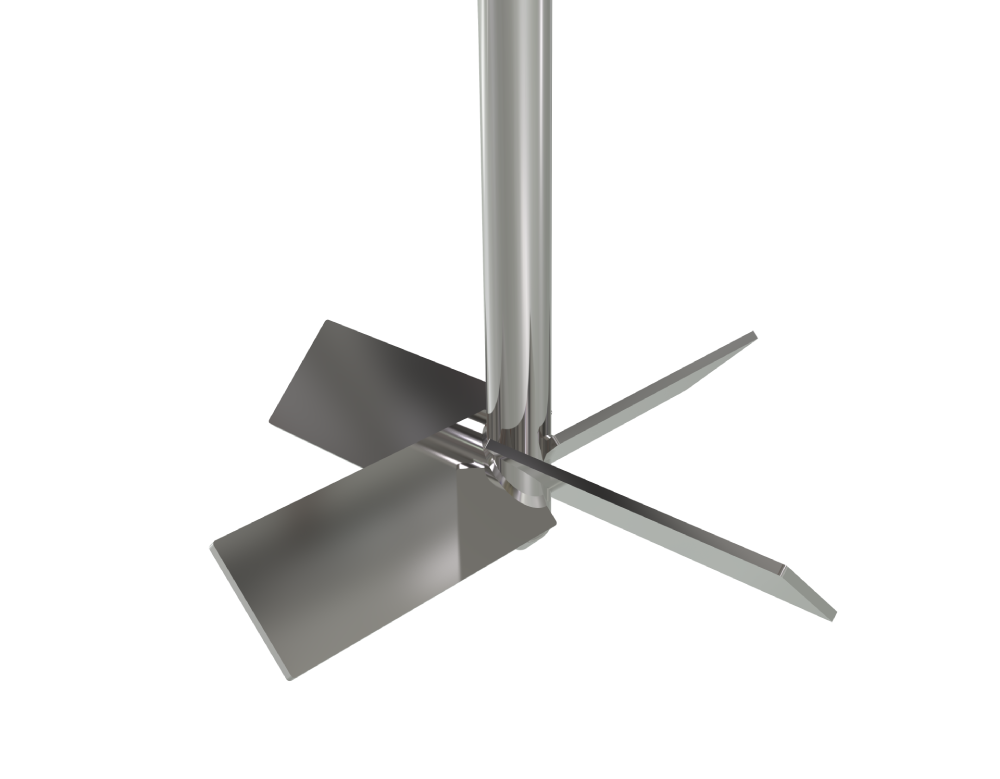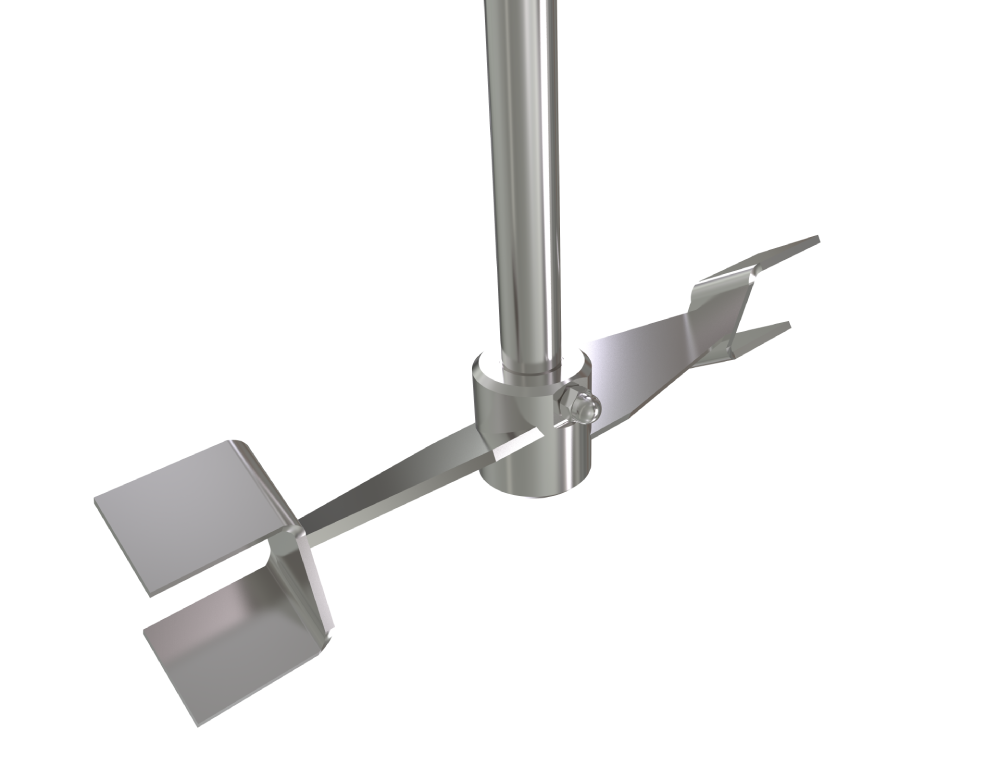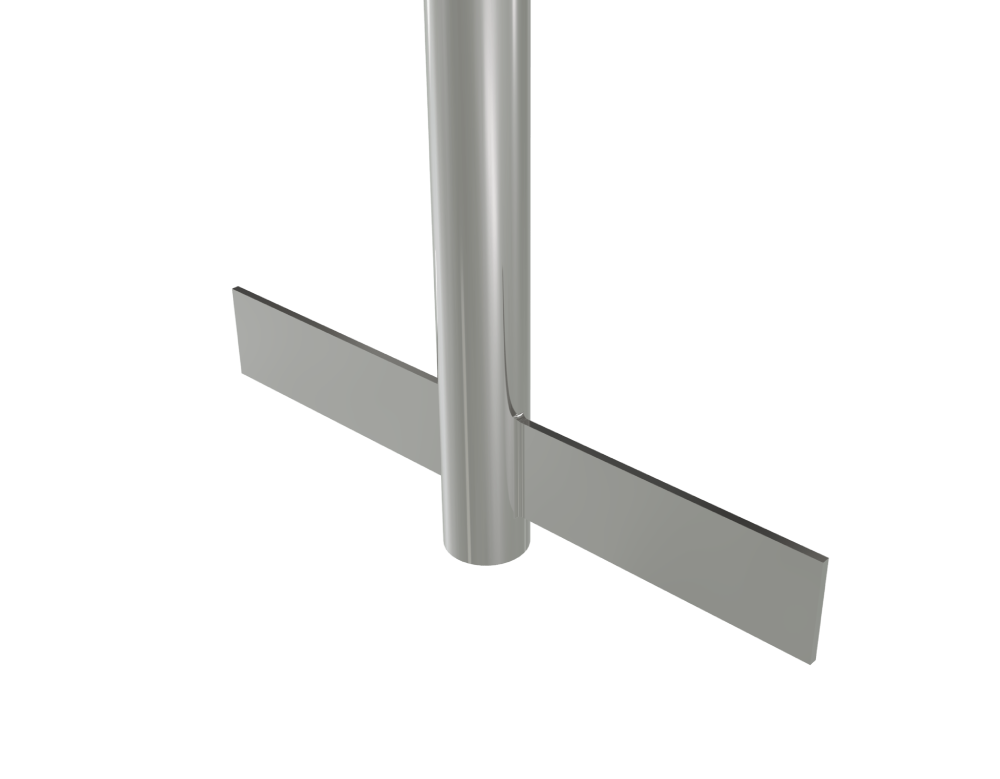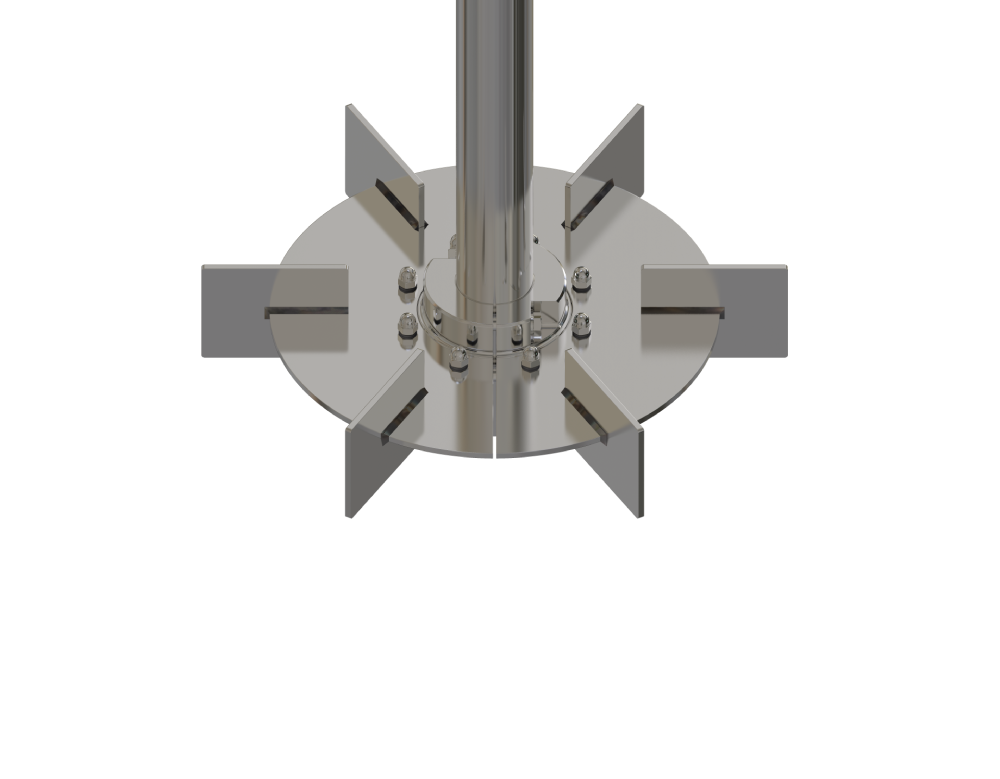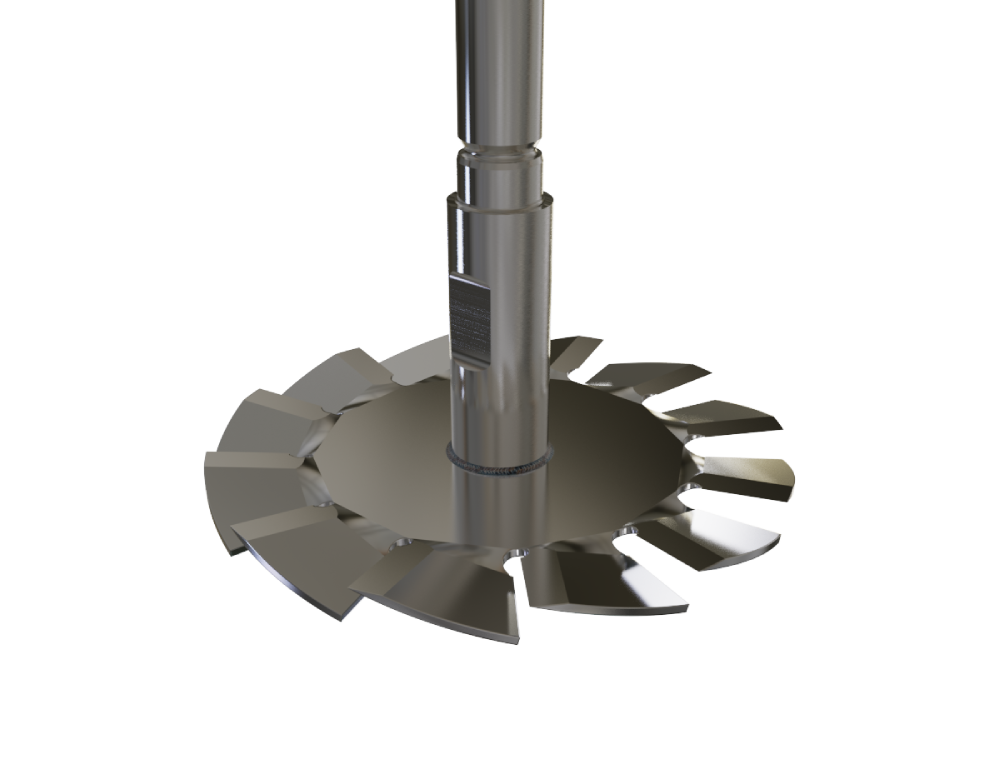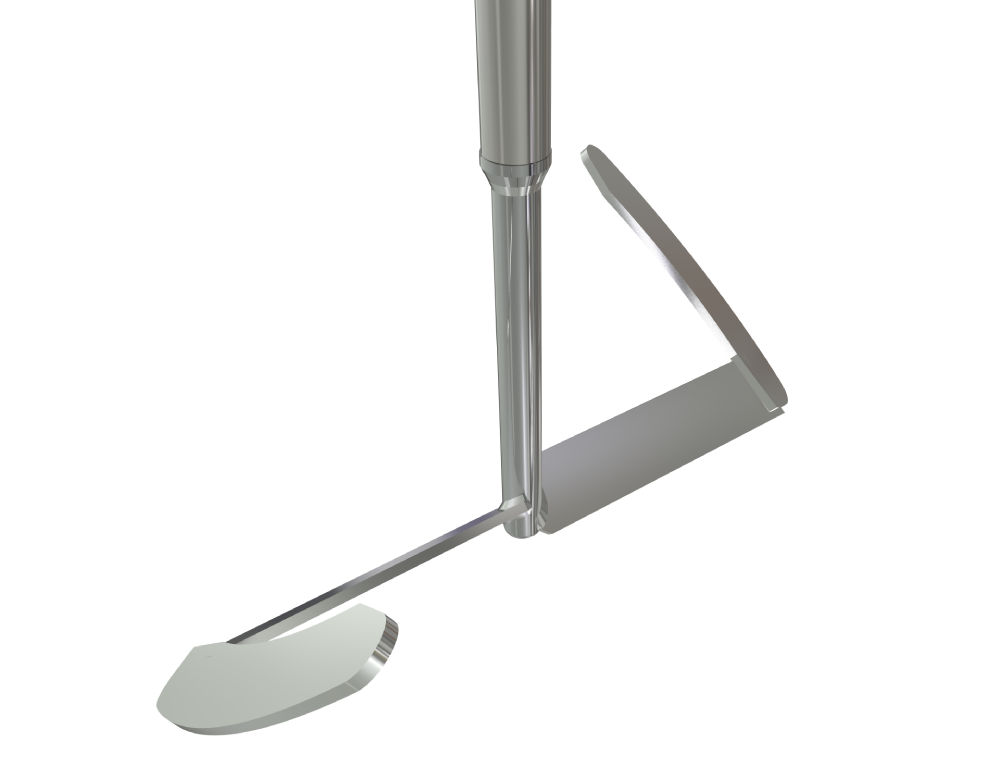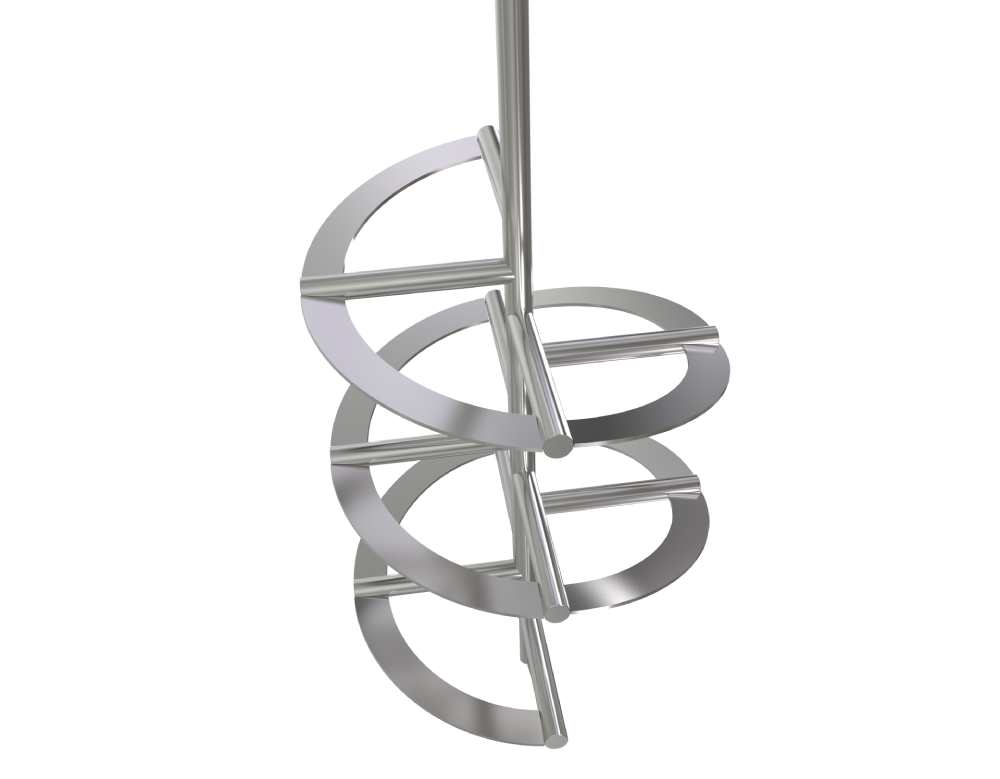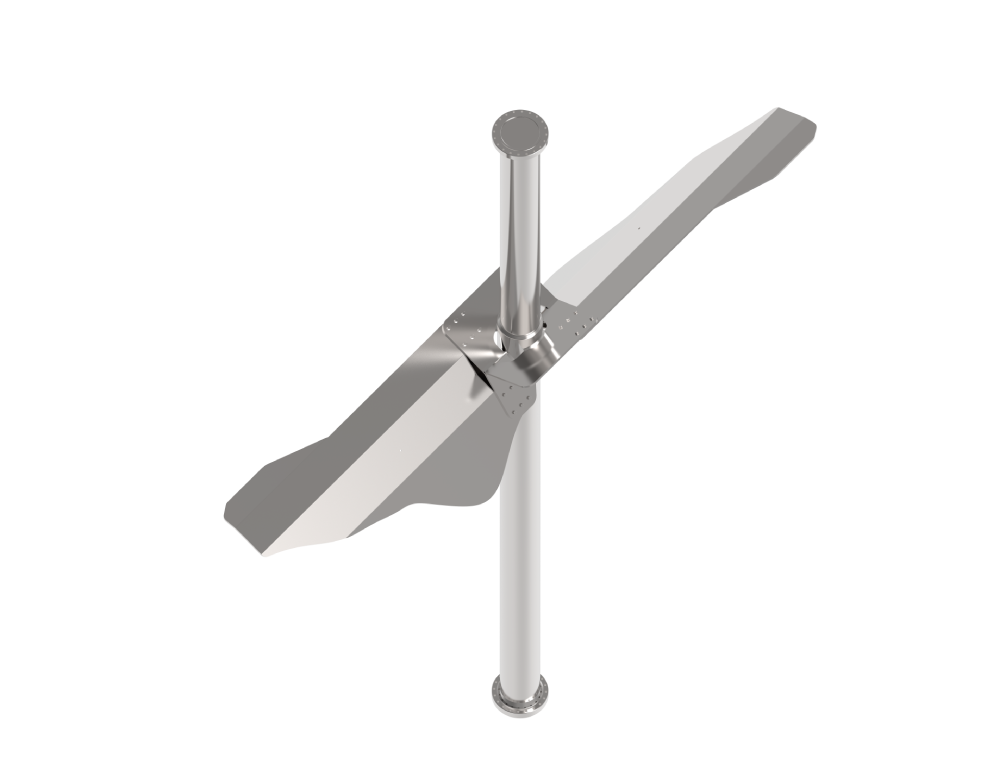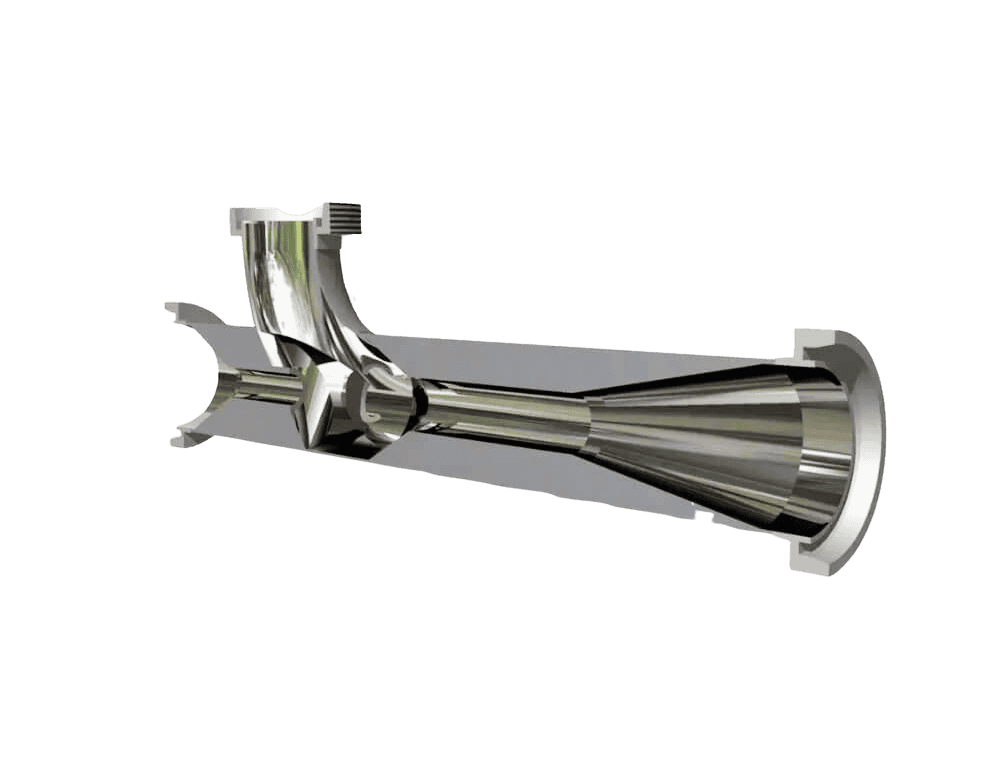
Select by Process Objective

Axial Flow

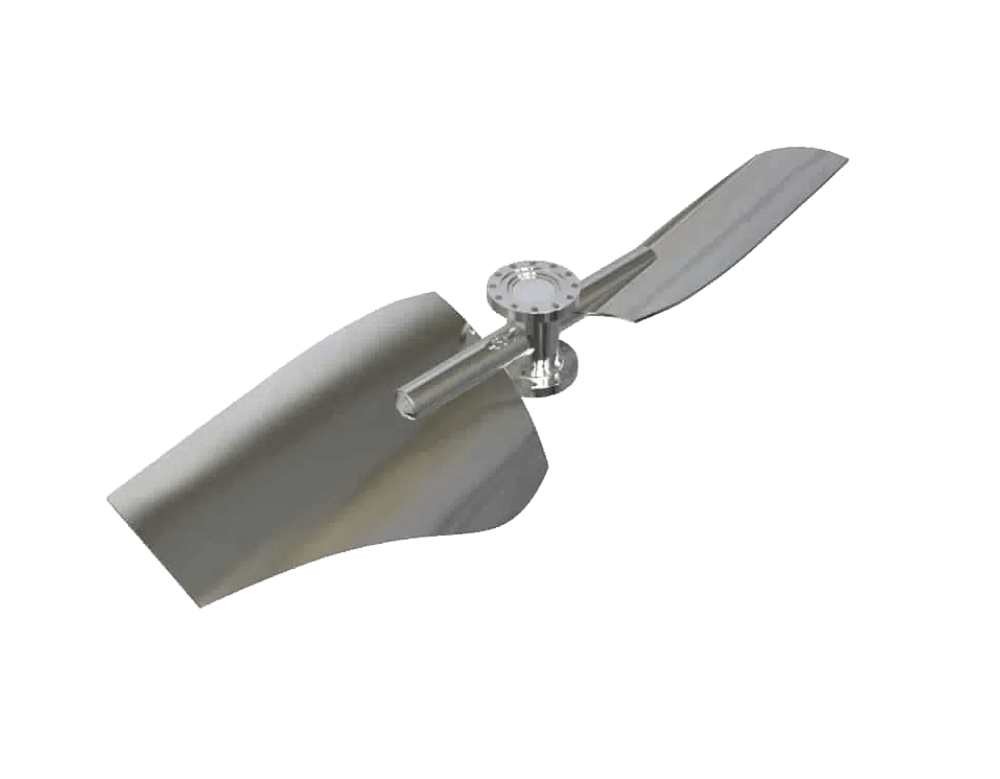
Axial-flow impellers move material primarily parallel to the agitator shaft, creating strong top-to-bottom circulation. They are commonly used for blending, solids suspension, heat transfer and maintaining uniform conditions throughout a vessel.

Potential designs include propellers, hydroprops, hydrofoils and axial-flow turbines.

Radial Flow

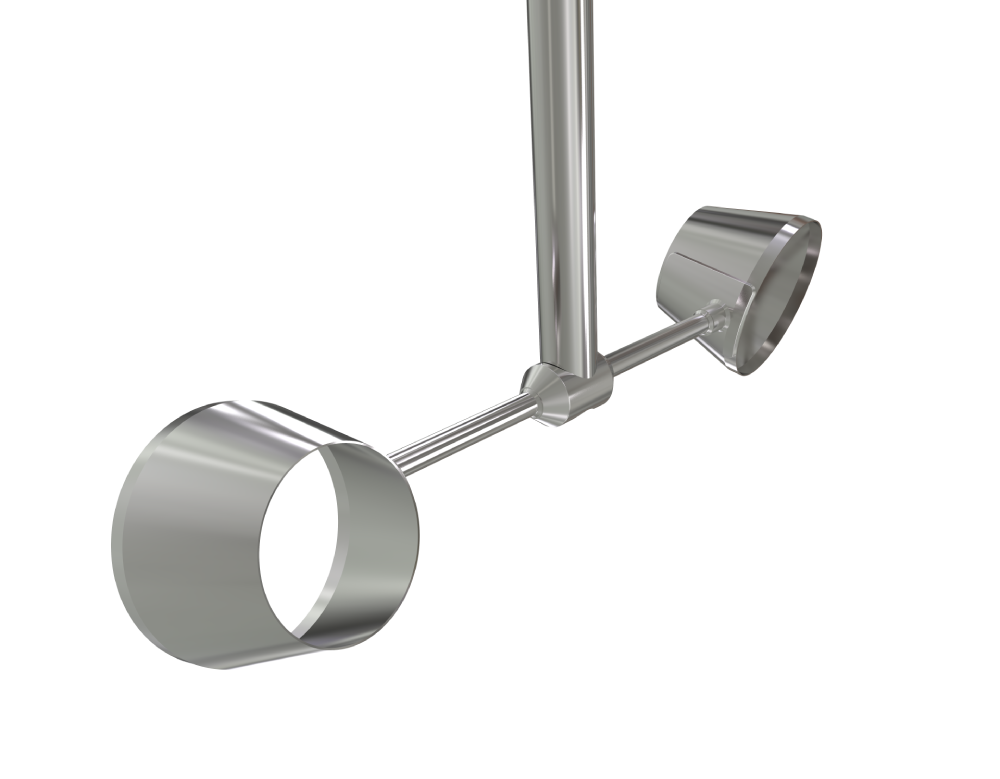
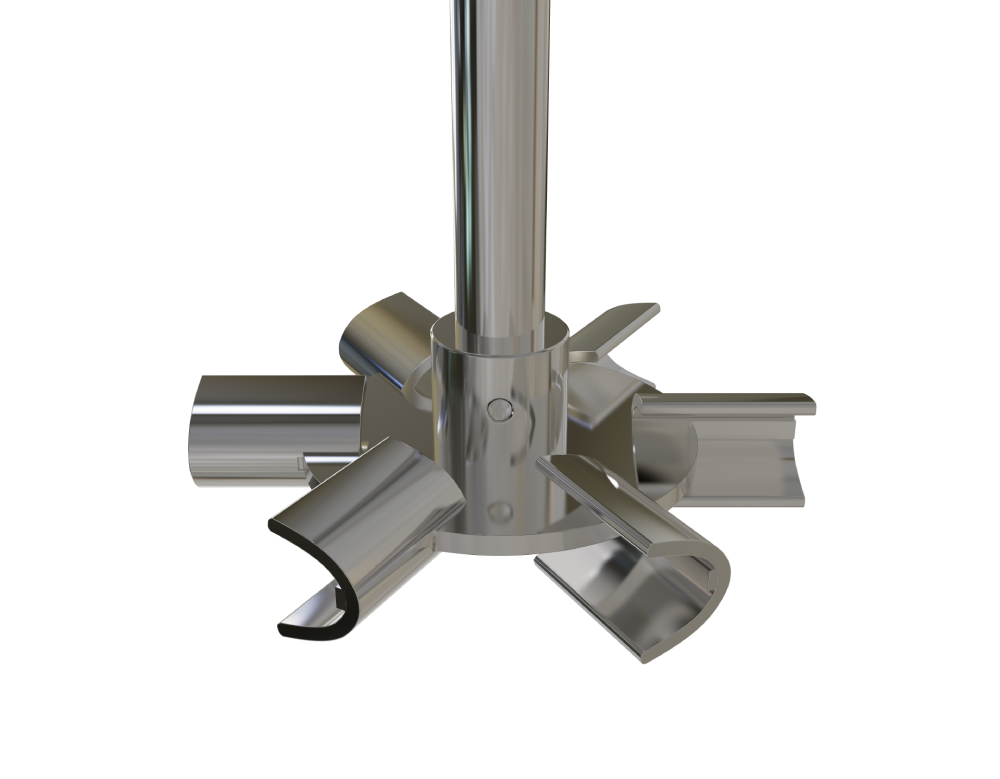
Radial-flow impellers move material outward toward the vessel wall, creating turbulence and localized mixing intensity. They may be selected for dispersion, gas-liquid contact, emulsification and processes requiring higher shear.

Potential designs include flat-blade, radial-flow, Rushton and concave turbines.

Blending and Homogenization

For blending miscible liquids or maintaining product uniformity, the objective is generally to circulate the vessel contents efficiently while minimizing unnecessary power input.

Hydrofoils, propellers, hydroprops and axial-flow turbines may be considered depending on the tank size, viscosity and required blending time.

Solids Suspension

Suspension applications require enough flow near the vessel bottom to lift particles and distribute them throughout the liquid. Selection depends on particle size, density, solids concentration, settling rate and whether complete suspension or off-bottom movement is required.

Axial-flow turbines, hydrofoils and reinforced or pinned designs may be evaluated for these applications.

Gas Dispersion

Gas-dispersion applications require a mixing element capable of breaking gas into smaller bubbles and distributing it through the liquid to promote mass transfer.

Rushton, concave and other gas-handling turbines may be considered, along with specialized gas-inducing mixers when gas is drawn from the vessel headspace.

Heat Transfer

Effective heat transfer requires continuous movement between the vessel wall or internal heat-transfer surface and the bulk product. The impeller must minimize temperature gradients without exposing the product to excessive shear.

Axial-flow and high-circulation designs are frequently considered, with the final selection based on viscosity, heat load and vessel configuration.

High-Viscosity Turnover

Viscous products may move as a mass rather than forming turbulent flow. These applications often require mixing elements that sweep the vessel wall and create circulation throughout the batch.

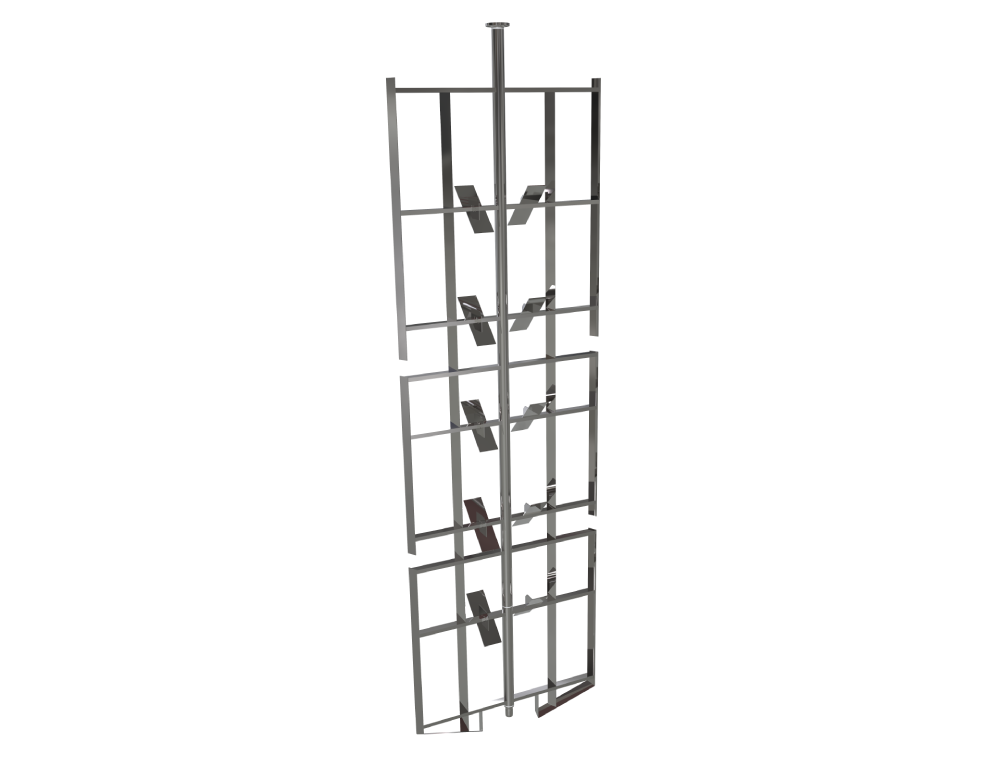
Anchor, gate, ribbon and other close-clearance designs may be considered. Counter-rotating systems can provide additional movement when a single impeller cannot achieve the required turnover.

Low-Shear Mixing

Shear-sensitive products require sufficient circulation without damaging particles, crystals, biological material or product structure. Larger, slower-speed impellers are often evaluated to produce the required flow at a controlled shear level.

Hydrofoils, axial-flow turbines and other high-pumping-efficiency designs may be appropriate, depending on the product.

Mixing-Element Comparison

De Dietrich’s portfolio also includes removable and reinforced variations of several designs, including hydrofoil and axial-flow turbine configurations.

Improve an Existing Mixing Process

A complete agitator replacement is not always necessary to improve process performance. In some applications, changing the mixing element, adjusting its position or modifying the operating speed can improve the existing system.

A retrofit evaluation may help address:

  • Excessive mixing time
  • Settling or floating solids
  • Incomplete batch uniformity
  • Temperature gradients
  • Poor powder incorporation
  • Excessive foaming or air entrainment
  • Product damage caused by high shear
  • High energy consumption
  • Vibration or mechanical loading
  • Increased production volume or changing product properties

Retrofit feasibility depends on the existing drive, shaft, vessel connection, mechanical loads and available space within the vessel.

Frequently Asked Questions

What is the difference between an agitator and an impeller?

The agitator is the complete assembly, which typically includes the drive, shaft, seal and mixing element. The impeller or mixing element is the component that contacts the product and produces the required flow.

Can the same impeller be used for every mixing objective?

No. An impeller designed for efficient liquid blending may not provide the shear required for dispersion or the bottom flow needed for solids suspension. Selection should be based on the specific process objective.

How does viscosity affect impeller selection?

As viscosity increases, product circulation becomes more difficult and flow may transition from turbulent to laminar. High-viscosity applications may require larger, slower-moving or close-clearance mixing elements that promote complete batch turnover.

Can an impeller be replaced without replacing the complete agitator?

Sometimes. The existing drive, shaft, connection and vessel must be evaluated to confirm that they can accommodate the new impeller’s torque, thrust, bending forces and operating speed.

How do you select an impeller for solids suspension?

Selection considers particle size and density, solids concentration, liquid properties, settling behavior, vessel geometry and the required degree of suspension. Testing may be recommended for unusual or variable solids.

Can impeller selection reduce energy consumption?

A magnetic coupling transfers power without a rotating shaft passing through a mechanical seal. This keeps the vessel hermetically closed and can reduce leakage potential, contamination risk and seal maintenance.

Tell Us About Your Mixing Process

Provide your product properties, vessel information and desired process result. Our engineers can evaluate the application and recommend an appropriate agitator configuration and mixing element.